Planting depth of trees and shrubs.
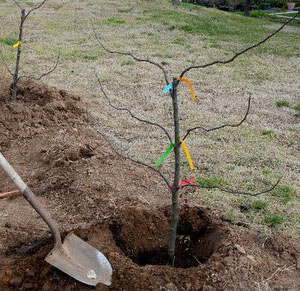
Planting depth is related to the depth of the pits or ditches as planting sites. The basic rule applies, that the sizes of the pits, so the depth and width should allow free placement and distribution of the root system. Therefore, to plant small young seedlings of trees or shrubs, it is enough to make a narrow hole with a peg or a shovel. Tree and shrub pits are usually dug to a depth of approx. 40 cm, it is rarely only necessary to dig deeper than 50 cm. The sizes of the planting pits with a clod of earth are adapted to the size of the clod. For a free placement of the lump, it is necessary to dig pits slightly wider than it. Digging pits much wider than required by the size of the root system or lump is usually beneficial for the plants, especially then, when the removed soil can be replaced with better structured and more fertile soil.
By planting trees and shrubs in irregular arrangements, pits are digged in places marked with pegs after their removal.
In order to ensure a constant vertical position of the planted trees, piles are used, which are hammered into the bottom of the pit before planting. The logs should be fully impregnated with fungicides. Firing is a good and long-used method of securing the part of the pile in the ground.
The length of the pile should be adjusted to the height of the trunk. Binding to the pile should be flexible and prevent the stump from rubbing against the pile in the wind. Ropes are used for tying, tapes and special ligaments made of plastics. Very tall and insufficiently stiff trunks should be tied at the highest point and halfway up.
The ground around the tree forms a bowl, which allows the water to stay while watering and soak it into the right place for the roots. It is good to cover the surface of the bowl 3-5 centimeter layer of mulch, which prevents excessive evaporation of the soil, and at the same time it protects it from brittleness due to watering. A layer of mulch protects the bowl against weeds to a large extent.