The planting depth determines the position of the root neck in relation to the surrounding surface. Generally accepted, that plants should be planted so deeply, how they grew in the nursery. Some trees and shrubs with the ability to easily form roots on the trunk and shoots can be planted deeper, such as willows, most of the poplars and most of the shrubs vegetatively propagated from woody cuttings. You can also plant a little deeper plants in loose soils providing air access to the roots. On the other hand, trees with hardwood react exceptionally badly to planting that is too deep, like for example. book,oaks, graby, because regeneration of the root system in these plants is inherently more difficult, and the lack of air access makes it even worse.
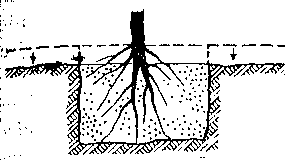 Shallowing the depth of planting a tree that rests its roots on a hard bottom, caused by sagging excessively.
When planting plants, you should also remember, that subsidence may cause their position to be shallow or deeper. Shallowing occurs then, when the soil- it is quite strong loosened around the tree planted, and the tree rests its stiff roots against the hard bottom of the pit. The depression, on the other hand, follows, when the bottom of the pit is too deep and too deep. You should also remember, that uneven subsidence of the soil below and beyond can disrupt the formation of young roots.
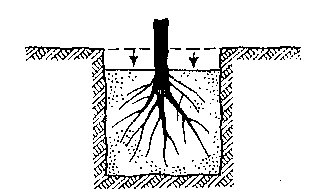 Depression of a planted tree due to excessive loosening of the bottom of the pit.