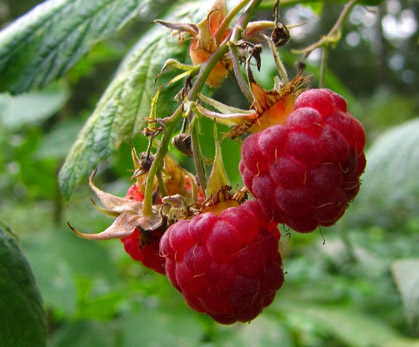
 PRODUCTION OF RASPBERRY PLANTS
Raspberry mother plantations are best established in fertile soils, moderately concise, airy and with high water capacity.
It is not allowed to establish nurseries near wild raspberries and production plantations.
Before establishing a plantation, the soil is fertilized with manure in the amount of 40-501, phosphorus per dose 40-60 kg i potasem 100-150 kg of pure ingredient per 1 ha. The distances between the rows in mother plantations should be 3-4 m, and between the plants in a row 50-60 cm. In multi-variety plantations, the distance between the varieties should be approx 5 m, to prevent confusion of the varieties.
Mother plantations are best established in the fall. Planted plants (we plant 5 cm deeper, than they grew before) should be immediately trimmed above the soil surface, and sprinkle the root necks with earth. In spring, the mounds are opened and nitrogen fertilizers are sown prior to planetary planetation. The annual dose of nitrogen in the pure component is approx 80 kg / ha. Fertilization with potassium and phosphorus is used at 3-4 lata, in doses recommended before establishing a plantation. In raspberry mother plantations, the soil is best kept clean with herbicides.
In the fall of the first year, all shoots are cut at 2-3 cm below the soil surface. In the following years, strongly developed shoots meeting the requirements of the standard are dug out, and then sorts them and, after tying them in bundles, is sold. Shoots cut without roots should be collected and burned every year.
No fruiting shoots are left on mother plantations. Thanks to this, you can use a very intensive protection program without fear of poisoning people.
Particular attention should be paid to the health of the seedlings. The most dangerous raspberry fungal disease is raspberry shoot dieback. The incidence of the disease is reduced by spraying Euparen (0,25%) lubTopsin M (0,1%). These chemicals also fight the second disease – household anthracnose, viral diseases such as: yellow raspberry leaf spot and raspberry mosaic; if they electrocute more than 3% plants, the entire variety is disqualified. On raspberry plantations, dangerous pests such as: stalk midge, spider mite and aphids, the control of which must be carried out in accordance with the raspberry plantation protection schedule.