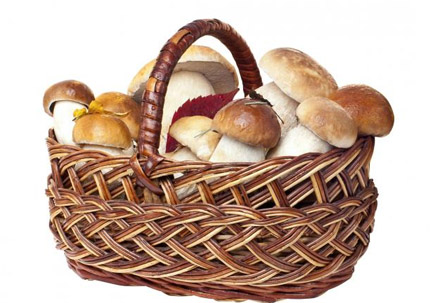
 Mushrooms
friable plants (made up of cells that are not joined into tissue), occurring mostly on land, also in inland and marine waters. So far, over 100 thousand. species. The so-called. mushrooms lower, belonging to the classes of wild mushrooms and algae. Higher mushrooms constitute a less numerous group, that is correct, forming the classes of bagpipes and basidiomycetes. Not having green bodies in their cells, fungi cannot use solar energy to produce organic compounds and therefore get them from self-feeding plants or animals. In this regard, mushrooms stand out: saprophytic – drawing nourishment from dead organisms of green plants, other fungi and animals (e.g.. pear-shaped puffball or bundle buttermilk), parasitic – developing on living organisms of green plants (e.g.. honey fungus), other fungi or animals (sparse), symbiotic – coexisting with plants, mostly with trees (e.g.. yellow buttermilk and sticky buttermilk with larchs, orange-yellow billy goat with birches). Mushrooms grow in forests, thickets, in the meadows, and even on rocks and sand. Bacteria (having spores in special cells-bags) and basidiomycetes (with spores at the top of cells called bases, in the veil) they produce large fruiting bodies, characterized by a variety of shapes, size, colors and consistency. More than such mushrooms have been distinguished in Europe 5 thousand. Most of the mushrooms found in Poland, edible and poisonous, produces hat-shaped fruiting bodies. There are also mushrooms with fruiting bodies: in the shape of a head mounted on the shaft (smardze, maroon chrysanthemum), club-shaped or spherical (purchawka, broadskin), branched bushy or cauliflower (horse-rider, rag), in the shape of hooves, consoles or shells (oyster mushroom).
Forest mushrooms could not be domesticated.
In Poland, they are grown for food: oyster mushroom, cultivated ringworm and common mushroom.