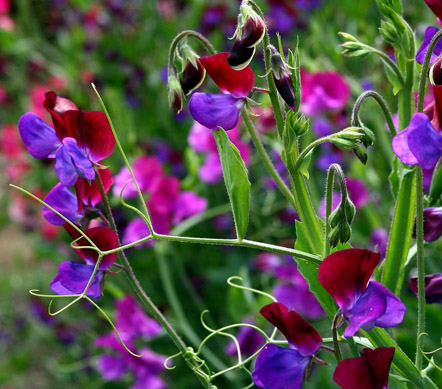
 Annual plants go through their entire development cycle in one growing season. Sown in spring, in summer, they produce shoots and leaves, they bloom and produce seeds, and in the fall they die. Seeds of some species can be sown directly into the ground, in well-cultivated and fertilized soil. Further care is only about weeding, watering during drought, loosening the soil, fertilizing and removing faded flowers.
Species very sensitive to cold, which, sown into the ground, would germinate for a very long time or even fail to bloom or produce seeds before the arrival of autumn frosts, they are sown into boxes in the greenhouse, inspectorate or apartment. When the seedlings are 3…4 leaves, they are quilted into boxes with a greater spacing. You can sow immediately after 1 …2 seeds in small pots or kefir foil wrappers and then quilting is unnecessary, and the seedling is planted in a permanent place without any problems. Before planting, the plants are hardened, i.e.. getting used to the conditions in the open ground: low temperature and water shortage. For this, for several days, the seedlings are taken outside during the day and watered very little, and for the night he brings back to the rooms. Plants are placed in the garden after the last frost, most often in the second half of May. After the plants have taken root, after 10…14 days, it is possible to feed them with a weak fertilizer solution for the first time.
Annual plants require a lot of light. Only impatience, tobacco and nasturtium grow well in semi-shaded places. The soil and water requirements are also high, and only a few species succeed in poor and dry soils, how: clarkia, kosmos, the tagetes. They require exceptionally fertile soil and a sunny position: chaber, godetia, peas, reseda, snapdragon, advertisea.