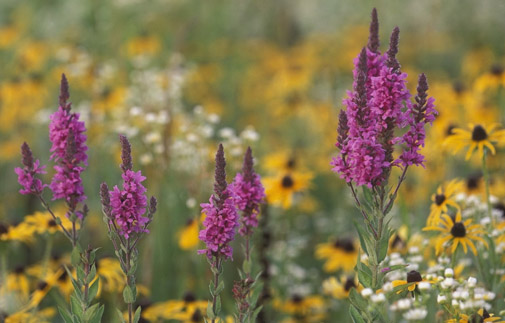
 In addition to specially cultivated plants, many wildflowers, herbs and grasses, after drying, it can be a component of a winter bouquet. Meadows are an inexhaustible treasury of plants useful for this purpose. You can find many decorative plants there.
The poor man. It is a plant with a characteristic smell, similar to the smell of parsley. It has white flowers, gathered in great umbels, and it grows practically everywhere – in the fields, railway embankments,.
Gypsophila. Also called gypsophila.
It is an enduring plant 80 cm in height.
It has a branched stem from the base, covered with tiny flowers, creating a kind of delicate mist.
Goldenrod. A common meadow plant with a straight stem, yellow flowers. It grows in forests, thickets, throughout the country.
Tansy. A common plant with a strong odor. It reaches a height of up to 120 cm, it has yellow flowers on its tall stem, gathered in rigid umbels. It grows in roadside ditches, thickets, on the edges of forests.
Grasses. Common wild grasses include: tizzy, cocksfoot, wiechlina, fescue, as well as ryegrass, stock photography, Persian, spikelets, mietlica, earthquice, brain, cane, foxtail, timothy, weed, trichinosis and many others. They are plants, which everyone meets on their wandering in the fields and often brings home, not knowing their names.
Easily dried meadow plants also include thistles and chrysanthemum.
The forest is also full of plants for dry bouquets. The pine twig stays fresh for a long time and will easily survive until the next season. One of the persistent plants is mistletoe, parasitizing on poplars, birches and pines. It grows high, so it is difficult to access, and it is picked from autumn to spring. An interesting ingredient of the bouquet are twigs with fruit, np.: berberysu, hawthorn, wild rose or rowan. Heather can be easily and nicely dried.
Roots are also useful for spatial compositions – they are harvested in late fall or early spring, before the leaves are put on the trees.