Bacterial cancer of fruit trees

Bacterial cancer of fruit trees – it primarily attacks stone trees. On the shoots, branches, the branches and trunks there are necroses and cankers, leading to sudden or chronic tree dieback. Dieback is accompanied by abundant gumming. Sometimes flowers die and fruit sets rot. On trees …
Apple and pear scab

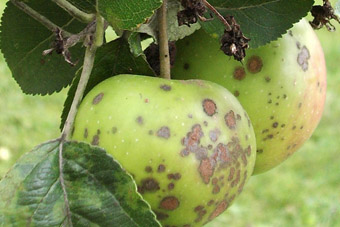
Apple and pear scabApple and pear scab – most often manifested on the upper side of the leaves as olive-brown spots, often confluent. Infected leaves fall prematurely. The spots on the fruit are larger, dark brown or black, and the skin of the fruit is rough at the site of infection, often cracked.…

Apple mildew

Apple mildew – the symptoms of the disease appear on the buds, later white flowers and young leaves and shoots, powdery bloom. Heavily affected shoot tips die. In the plots, it is primarily necessary to cut and burn infested shoots.…

Peach leaf curl

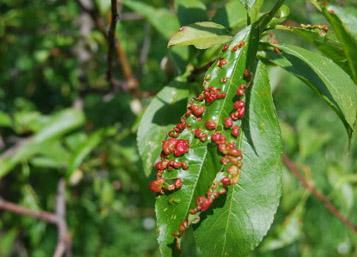
Peach leaf curlPeach leaf curl – affected leaves are thickened, folded and curled, initially pale green, later carmine of different shades, mass prematurely descend, trees grow and bear fruit less, they are strongly rubberized and freeze more easily. Spraying should be carried out just before bud break.…

Fine leaf spotting of stone fruit trees

Fine leaf spotting of stone fruit trees – a very dangerous disease of cherries. The first symptoms appear at the turn of May and June in the form of minor ones, a few brown-red spots on the lower leaves. Leaves turn yellow and fall prematurely.…

Brown rot of pome trees

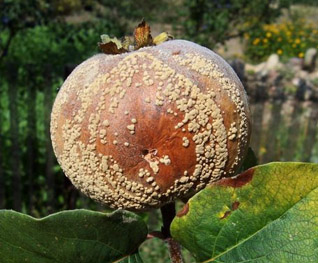
Brown rot of pome treesBrown rot of pome trees – mainly apple tree disease, grusz, sometimes also plums. The symptoms are mainly found in the fruit, which rot and turn brown or black, and drying up they form the so-called. mummy.
Mummies and rotting fruit must be carefully collected and destroyed.…

Anthracnose – fall of currant leaves

Anthracnose – fall of currant leaves – the symptoms are on the leaves, less often on fruit and non-lignified shoots. Already at the end of May they are visible on the lower leaves (first on their bottom) Single, minor, yellow spots. Leaves fall prematurely, bushes bear fruit less …

American gooseberry mildew

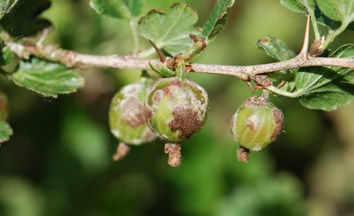
American gooseberry mildewAmerican gooseberry mildew – occurs on gooseberries and black currants. The leaves and shoots of these plants, and in the case of gooseberries, often also fruit, cover mealy, the white coating gradually darkens and turns brown. Infested shoots do not grow, their tops die. The shoots should be infected …

Diseases of fruit plants

mushrooms, bacteria and viruses, most often causing spots, holes, gangrene and various mosaics and rubbery, leading by prior leaf fall, dieback of flowers, shoots, and even whole branches until the yield drops or declines, and sometimes even the death of entire plants. Plant diseases …

Reticulated boletus

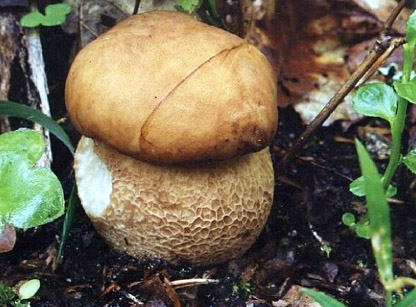
Reticulated boletusReticulated boletus – synonymous names (regional) as with the boletus

first-class mushroom. It has a hat with a diameter of 6…30 cm, brighter than boletus, pale brown to hazel brown in color, often with a whitish border, also greyish brown or ocher gray, under the magnifying glass …