 Cuts to enhance the flowering effect. In order to increase the flowering effect, the removal of older shoots and branches is most often used, which, by excessively thickening the bush, they cause, that ordinary flowers appearing on annual or two-year-old shoots are less impressive, often finer and in smaller numbers. Loosening the flowering bush also has this advantage, that the numerous flowers forming on the inner shoots become visible, so that their decorative value can be used.
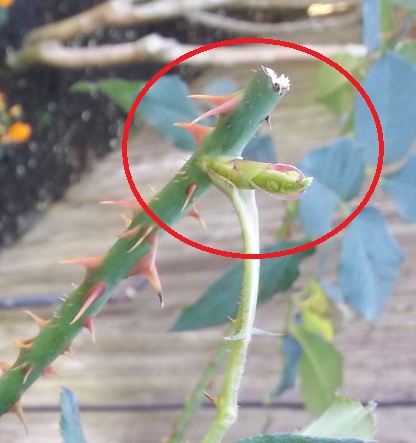
Roses are particularly intensively flowering shrubs due to their flowering. All species of roses form flowers at the ends of young one-year-old shoots. Wanting to get strong and long shoots, which are desirable in the cultivation of large-flowered roses (for a cut flower), shrubs are cut quite low, leaving a small number of buds on the shoot. Growing roses in green areas (most often they are low multi-flower roses, called polyists) rather, the aim is to obtain a large number of smaller shoots and to give the shrub a natural habit. Therefore, cutting polyanthus roses is to leave longer shoots with more buds, from which young shoots can grow. If some shoots grow back too much during growth, you can trim their tops, which causes the shoot to branch out. As a result, the shrub is given a better lumpy shape and the flowering effect can be improved.
Shrubs of park and climbing roses are cut according to the general rules of shrub care.
Quite an important procedure, which may have a positive effect on flowering in the following year, after flowering of these shrubs is removed, which have the ability to form seeds or fruits with low decorative value.
Sanitary cuts. These are primarily cuts that prevent the spread of the pathogen, consisting in the removal of branches affected by disease or dead.